spikeinterface
0.95.0

Contents:

  • Overview
  • Installation
  • Getting started tutorial
  • Modules documentation
  • Modules tutorials
    • Core tutorials
    • Extractors tutorials
    • Preprocessing tutorial
    • Sorters tutorials
    • Postprocessing tutorial
    • Quality metrics tutorial
    • Comparison tutorials
    • Widgets tutorials
      • Core tutorials
      • Extractors tutorials
      • Preprocessing tutorial
      • Sorters tutorials
      • Postprocessing tutorial
      • Quality metrics tutorial
      • Comparison tutorials
      • Widgets tutorials
        • RecordingExtractor Widgets Gallery
        • SortingExtractor Widgets Gallery
        • Waveforms Widgets Gallery
        • Peaks Widgets Gallery
  • Compatible Technology
  • Containerized Sorters
  • Installing Spike Sorters
  • Viewers
  • Contribute
  • API
  • Release notes
  • Contact Us
spikeinterface
  • »
  • Modules tutorials »
  • Widgets tutorials »
  • RecordingExtractor Widgets Gallery
  • Edit on GitHub

Note

Click here to download the full example code

RecordingExtractor Widgets Gallery

Here is a gallery of all the available widgets using RecordingExtractor objects.

import matplotlib.pyplot as plt

import spikeinterface.extractors as se
import spikeinterface.widgets as sw

First, let’s create a toy example with the extractors module:

recording, sorting = se.toy_example(duration=10, num_channels=4, seed=0, num_segments=1)

plot_timeseries()

w_ts = sw.plot_timeseries(recording)
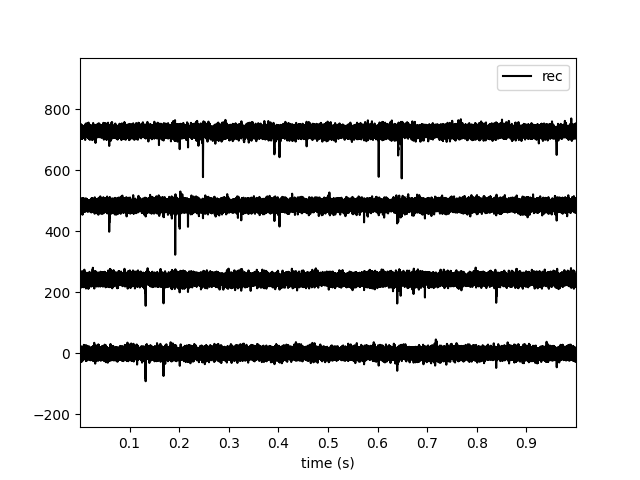
plot 1 rec gallery

We can select time range

w_ts1 = sw.plot_timeseries(recording, time_range=(5, 8))
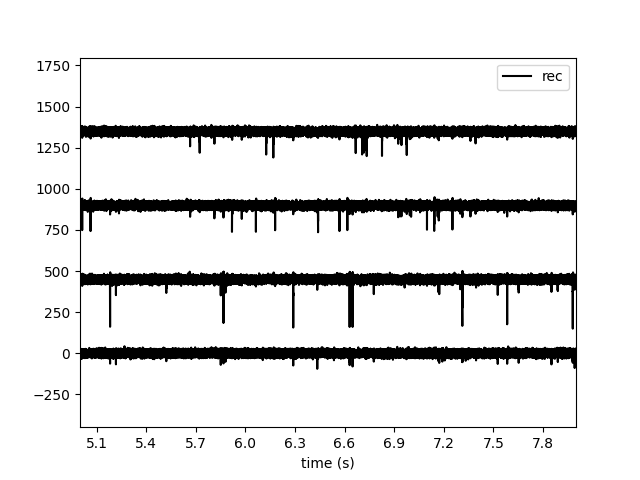
plot 1 rec gallery

We can color with groups

recording2 = recording.clone()
recording2.set_channel_groups(channel_ids=recording.get_channel_ids(), groups=[0, 0, 1, 1])
w_ts2 = sw.plot_timeseries(recording2, time_range=(5, 8), color_groups=True)
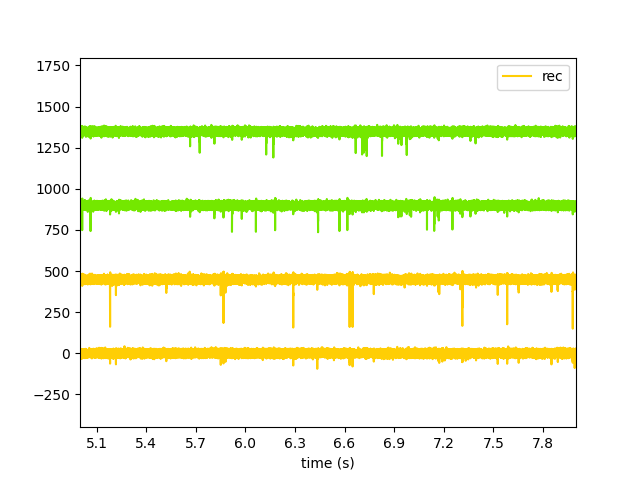
plot 1 rec gallery

Note: each function returns a widget object, which allows to access the figure and axis.

w_ts.figure.suptitle("Recording by group")
w_ts.ax.set_ylabel("Channel_ids")
Text(26.847222222222214, 0.5, 'Channel_ids')

We can also use the ‘map’ mode useful for high channel count

w_ts = sw.plot_timeseries(recording, mode='map', time_range=(5, 8),
        show_channel_ids=True, order_channel_by_depth=True)
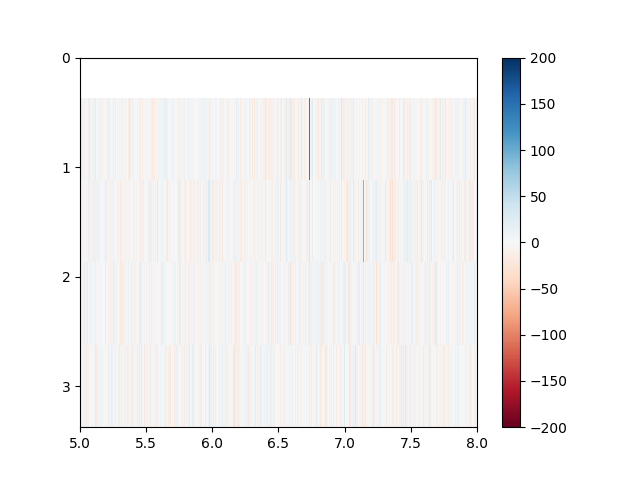
plot 1 rec gallery

plot_electrode_geometry()

w_el = sw.plot_probe_map(recording)


plt.show()
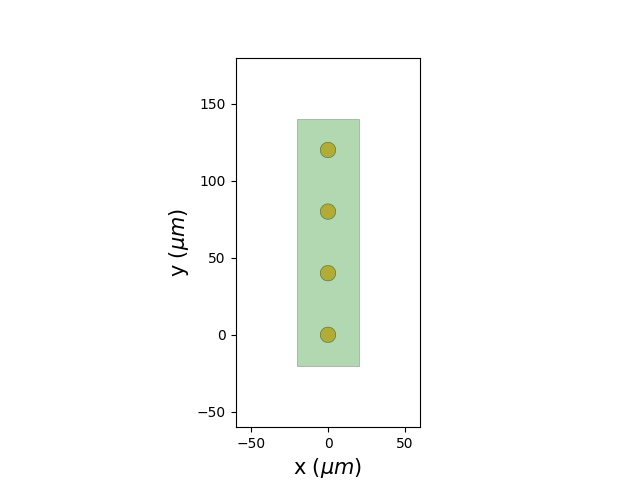
plot 1 rec gallery

Total running time of the script: ( 0 minutes 1.035 seconds)

Download Python source code: plot_1_rec_gallery.py

Download Jupyter notebook: plot_1_rec_gallery.ipynb

Gallery generated by Sphinx-Gallery

Previous Next

© Copyright 2021, Alessio Paolo Buccino, Cole Hurwitz, Jeremy Magland, Matthias Hennig, Samuel Garcia. Revision c9df65b7.

Built with Sphinx using a theme provided by Read the Docs.